More and more people are moving away from the countryside and into urban centers. This global urbanization comes with a multitude of challenges. Studies have shown that city dwellers are more likely to suffer from mental illnesses but the mechanisms behind this are still poorly understood. The burgeoning field of Neurourbanism (which developed as a subfield of Environmental Neuroscience) aims to address, through inter- and transdisciplinary collaboration, the question of how cities can be made more liveable and what urban design decisions might harm or promote wellbeing.
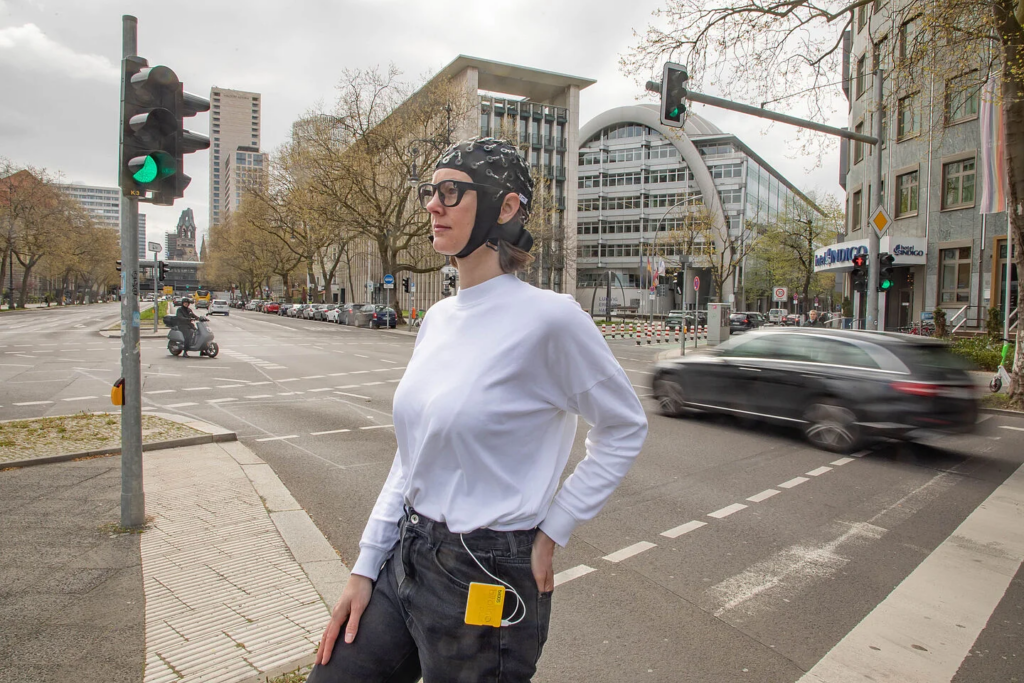
In our lab, we apply neuroscientific methods to investigate how urban density factors influence people’s emotional and stress experiences in urban environments, using stationary, as well as MoBI protocols in VR and the real world. Another focus lays on the investigation of methodological implications in neurourbanistic research.
One specific focus of research in our lab concerns evaluating the methods used in neurourbanistic research.
Many studies in the field use consumer-grade EEG systems with few electrodes. In our lab we aim to contribute to Neurourbanism by conducting studies with high-density, medical grade mobile EEG equipment. We have additionally specialized in multi-modal physiological recordings, integrating measures like ECG, EDA, and eye tracking with mobile EEG.
Another topic of interest is the ecological validity of different experimental protocols. While real world studies are the “gold standard”, they are logistically and economically costly. We aim to investigate how physical and affective response to real world urban environments compare to virtual environments. This provides valuable insights for the design of future studies as well as other applications for evaluating urban design.
Project (ongoing): MoBI during Urban Stress (MoBIdUS)
The interaction between a person and their environment influences intrinsic neural patterns associated with cognition and emotional processes. To improve our understanding of this interplay, the MoBIdUS project seeks to quantify the relationship between human subjective experience and the urban environment shaping it. MoBIdUS collects data from multiple sources, leveraging neurophysiological (64-channel EEG, fNIRS), peripheral physiology (ECG, NIBP, PPG, EDA), behavioral (Eye Tracking), and self-reported (STAI, stress level, affect, valence) data.
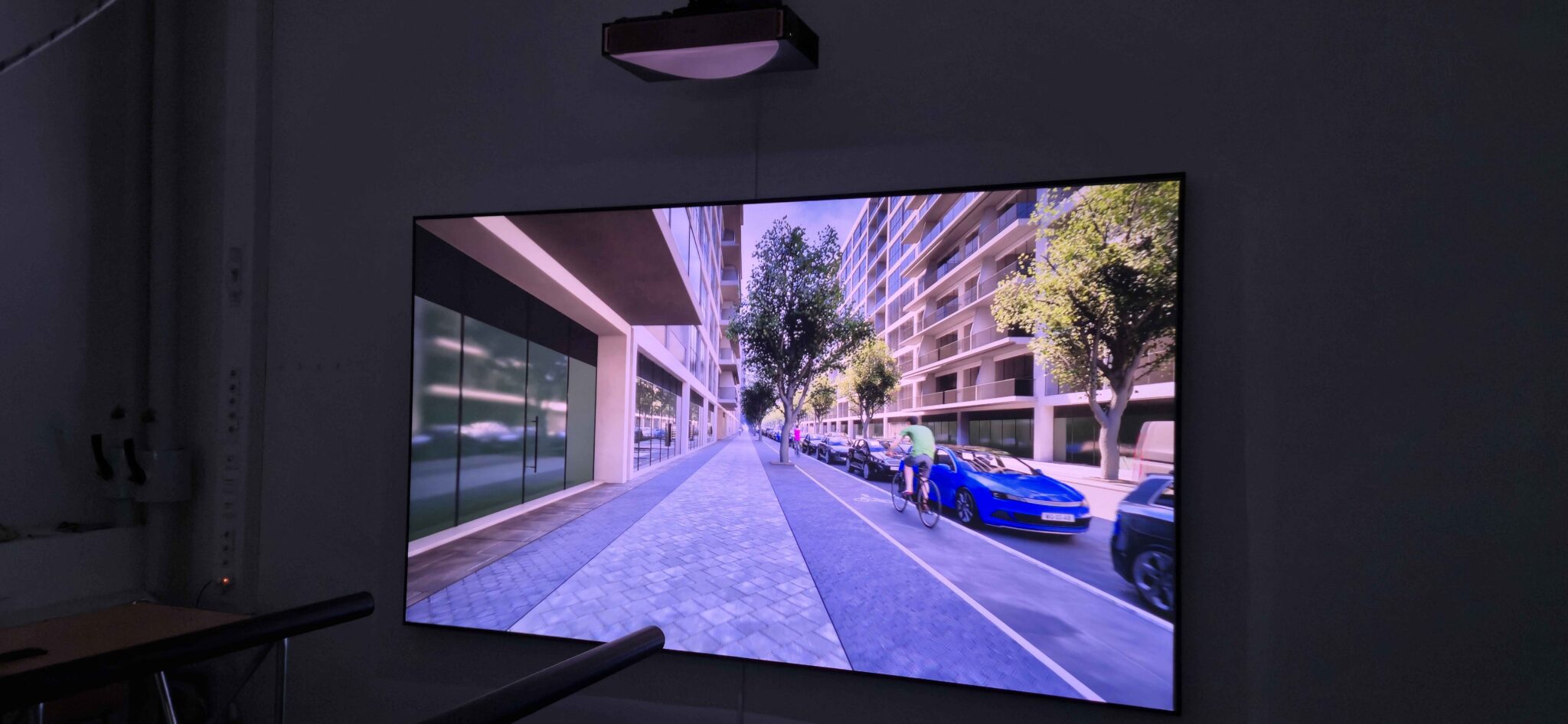
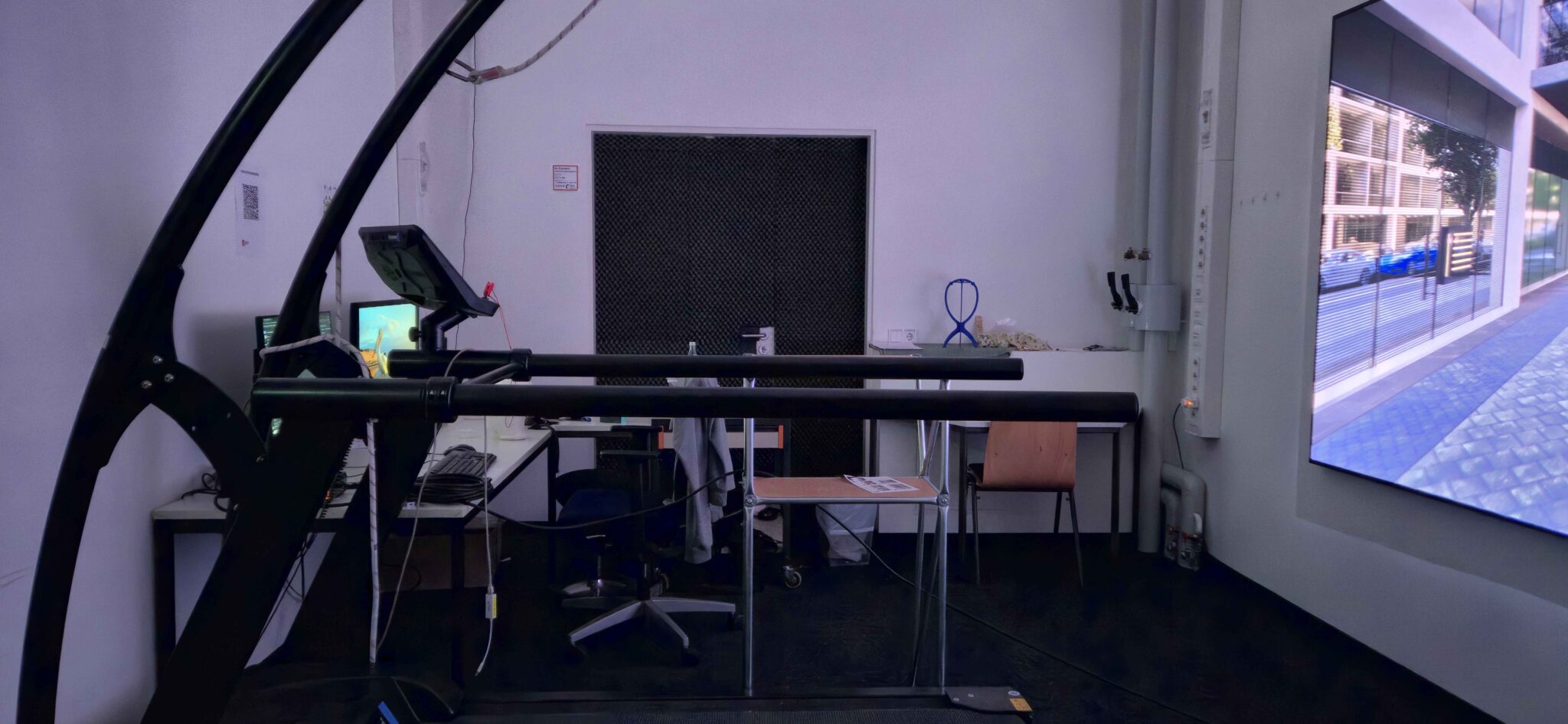
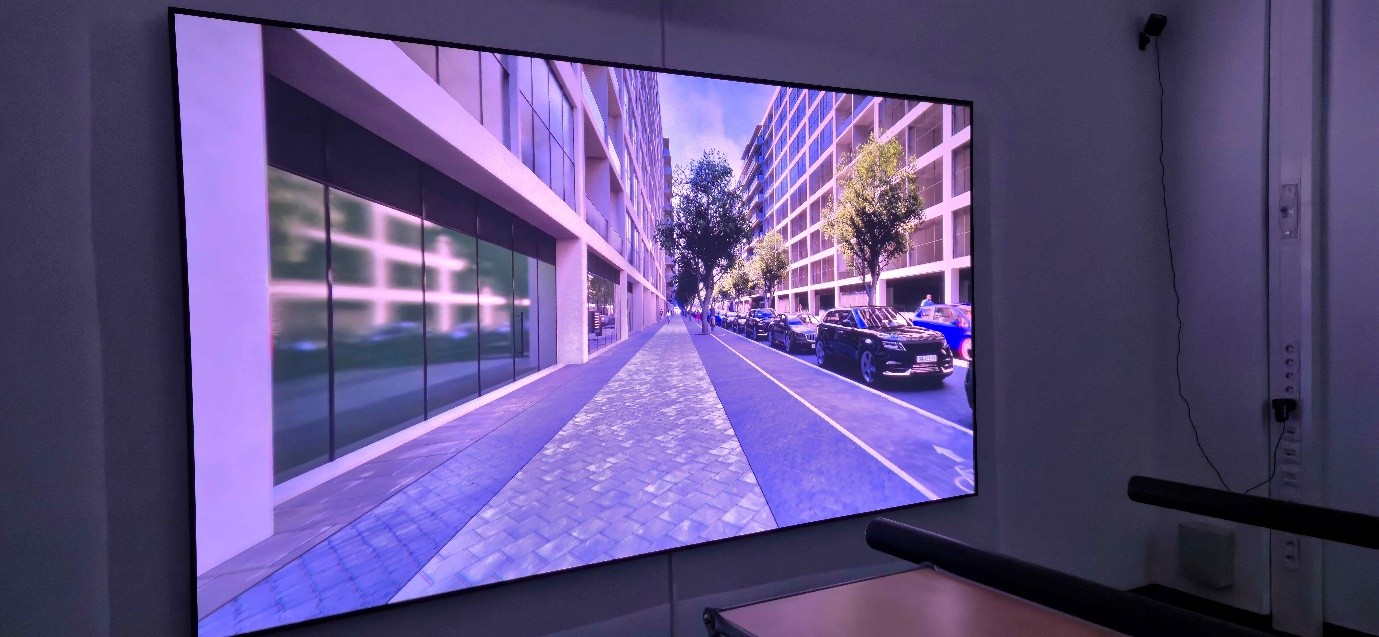
This research takes place in a highly-controlled lab setting at the BeMoBIL, reproducing a city setting while avoiding the caveats of real-world experiments. Participants are presented with 2D videos depicting a model street with systematically manipulated building-street ratios, revealing increasing stress levels with increasing built density (Trossman-Haifler & Fisher-Gewirtzman, 2022). All other variables within the city model (e.g. greenery, building morphology, pedestrians) remain constant across three virtual environments: low/mid/high building density. Given that active behavior modulates brain activity, participants watch these videos while standing and walking on a treadmill.
This project has been presented as a planned study in the Naturalistic Neuroscience conference (May 2026), and with preliminary analysis during MoBI’26 (August 2026).